
We live in an age where our first reaction to a warning sign from our body is to reach for our phone. You type into Google or ChatGPT: Clicking under the shoulder blade, neck and lower back pain with endometriosis – what to do?"..
In a fraction of a second, you get a flood of generic advice: from stretching the trapezius muscle and foam rolling your back, to gynecological tips and scare tactics about serious illnesses. The result? You are left with even more mental chaos, anxiety, and zero certainty about what is actually safe for you.
To show you why artificial intelligence and search engines fail when it comes to a living body, let me use a specific case study from my clinic.
CASE STUDY: When a patient with endometriosis presents with shoulder and neck pain
The patient's situation: A woman diagnosed with adenomyosis (a close relative of endometriosis) comes to see me. Usually, this disease is associated exclusively with the lower abdomen or the lumbar spine. However, her main, most troublesome problem at that moment was not the lower abdomen itself, but a sharp, stabbing pain in her shoulder blade, a tense shoulder, and a stiff neck..
What would AI / a search engine say? If we plugged this set of symptoms into an algorithm, it would break the body down into unrelated pieces:
- For endometriosis, it would provide general dietary and gynecological advice.
- For shoulder and neck pain, it would suggest universal upper-body stretching exercises or a deep tissue massage.
What actually happened in the clinic (the reality): For the algorithm, these are two separate worlds. For the human body, they represent a single, interconnected system of tension:
- Chronic pain and inflammation in the pelvis triggered a defensive, shallow breathing pattern (holding the breath) in the patient.
- The diaphragm became stiff (due to increased tension in the abdominal muscles), and the heavy lifting of breathing was taken over by the accessory respiratory muscles (the neck and chest).
- The restricted chest changed the mechanics of how the shoulder blade moved, leading to shoulder overload and a stabbing pain right at the top.
- The final outcome: The client gained awareness of how to work through her shoulder pain and stiff neck, while also strengthening her lumbar spine. Now, her pain during movement is negligible!
- She received answers to all her questions without fear, learning exactly what to do to get results.
Why AI will never replace real human contact
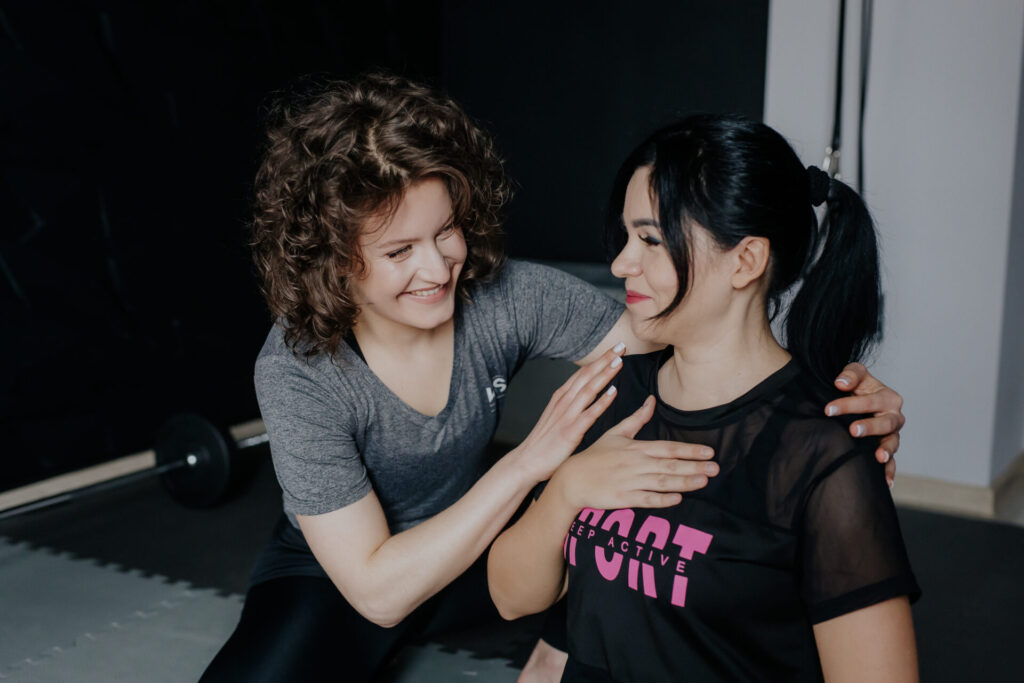
- AI cannot feel the tissue under its hands: An algorithm cannot check in real time whether your tissue relaxes after a gentle stimulus or tightens in a defensive reflex.
- AI treats the symptom in the text, not the person: It won't connect past injuries, stress levels, the nervous system, and breathing patterns into one cohesive whole.
- AI won't give you a sense of security: An algorithm can generate dozens of pages of theory, but it won't create a space where you can calm down and feel that your autonomy and safety come first.
The biggest barrier to recovery is rarely a lack of knowledge. Most often, it is decision paralysis and the fear of hurting oneself..
If you are tired of...
going from specialist to specialist, reading forums, and wondering what you should actually choose – take that weight off your shoulders.
Instead of asking algorithms, book a Quick Needs Analysis (30 min)..
It is half an hour of calm conversation and a preliminary assessment. No jumping into the deep end, no rigid contracts, and no pressure. We will connect the dots, analyze your situation, and set up a clear, safe plan of action on your terms.
Booking a session is possible through Booksy!