
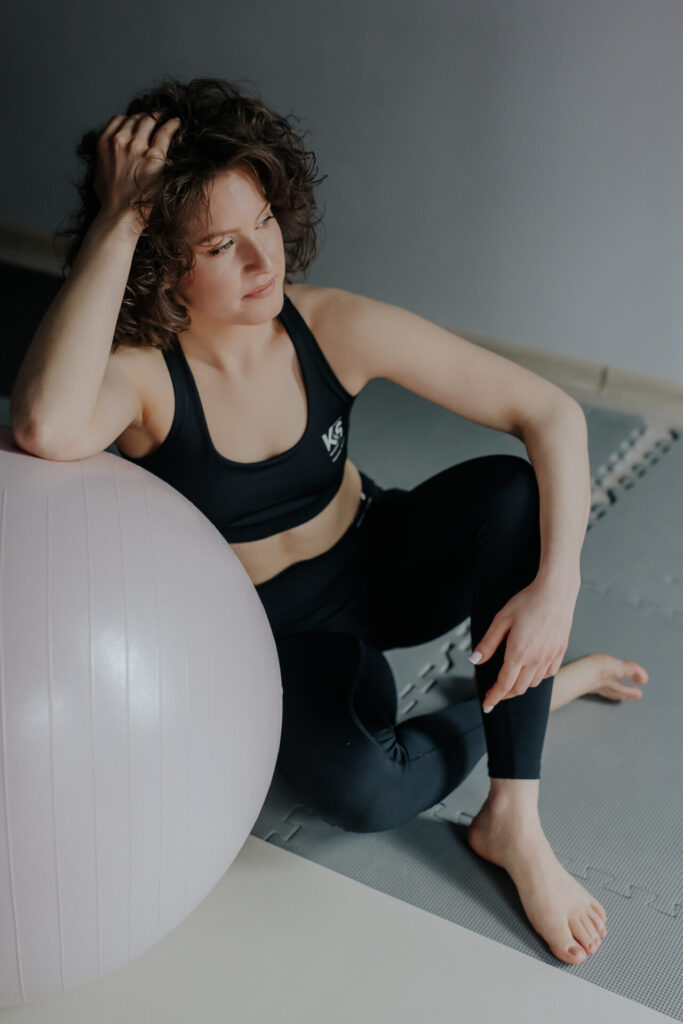
Endometriosis is a insidious disease that rarely limits itself solely to the lesser pelvis. Women battling this condition very often experience chronic back pain, a tense neck, soreness around the shoulder blades or shoulders, as well as anxiety and low mood. Understanding how physical pain intertwines with the response of the nervous system is the key to regaining control over your own body.
1. The Vicious Cycle: A Nervous System at War
Chronic pain and its accompanying anxiety create a self-perpetuating mechanism:
Anxiety leads to activity avoidance: Out of fear that the pain will worsen, we begin to limit our movement.
Activity avoidance weakens the muscles: A lack of movement stimuli weakens the muscular system and reduces stabilization.
Weaker muscles = more pain: Less strength and flexibility translate into greater overload on the spine and joints.
More pain = low mood and anxiety: The body sends a constant distress signal to the brain.
Conclusion: We must break this cycle with safe movement. It is worth remembering that sedentary work and continuous psychological stress accumulate directly in the neck and upper back area, compounding the discomfort you feel.
2. What Is Medical Fitness in This Context?
Medical fitness is not a classic, grueling gym workout – it is a purposeful, targeted movement therapy:
Individualization: Exercises are precisely selected based on your current capabilities – even if, during a given session, that means only conscious breathing.
Neuroplasticity: Through repetition, we teach the nervous system that movement is safe, not threatening.
Regulation: The training is not meant to "exhaust" or overstimulate you; its goal is to lower cortisol (the stress hormone) levels.
3. How I Help You Understand Your Pain
In coaching and therapeutic work, building a new, safe relationship with your body is incredibly important:
Differentiating stimuli: I teach you to distinguish "good pain" (normal muscle fatigue after exercise) from "bad pain" (the acute pain of endometriosis or overload-related spinal pain).
Managing the load during flare-ups: I show you how to modify movement on tougher days so you don't give up on activity entirely, while also avoiding overloading your body.
Locating anxiety: I ask you where the anxiety appears and during which exercises. By performing them together with you, we make that anxiety fade away.
Diaphragmatic breathing work: This calms the parasympathetic nervous system and reduces tension in the upper back.
Thoracic spine mobilization: Rotational and decompressing movements that bring relief to tight areas.
Deep muscle control: Learning stabilization without overloading painful areas.
4. Movement as Your "Pill" for Anxiety
Systematic, tailored movement triggers a range of positive biochemical and psychological changes:
It increases the secretion of endorphins and BDNF (a protein that supports brain function and neuroplasticity).
It builds an invaluable sense of agency: "My body is capable of making this movement, despite the illness."
Do you feel like pain and anxiety are taking control of your body??
You don't have to go through this alone. I invite you to my private studio in the center of Katowice. We will analyze your current capabilities and retrain your nervous system for safe movement.
*  📲 Book directly through Booksy – choose a convenient time and take this step in a full sense of security.